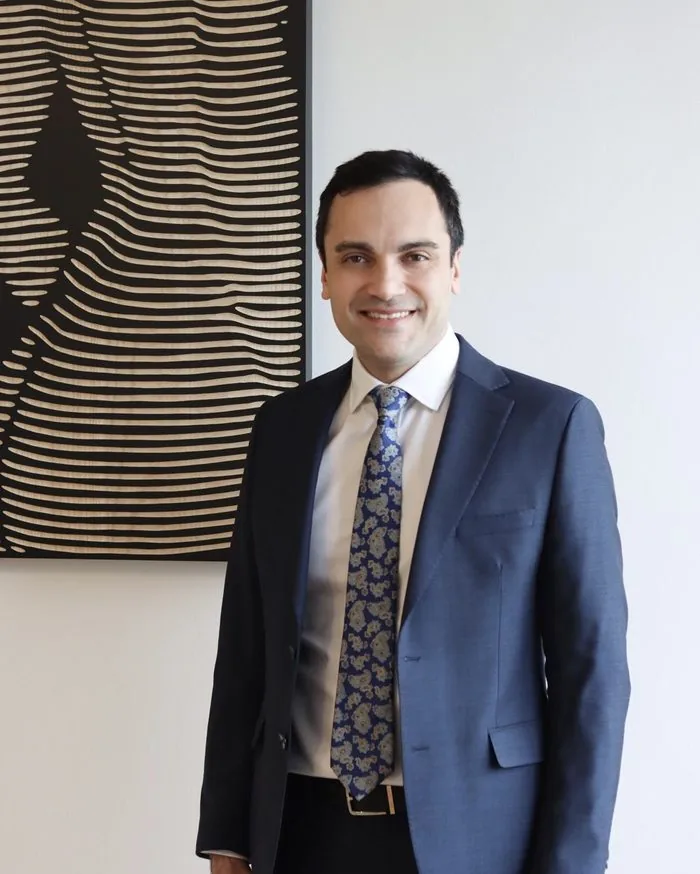
Double board-certified surgeon (FACS, FEBOPRAS, Doçent), JCI-accredited hospital, board-certified specialist anaesthesiologist on every case, MoH-authorised international health tourism clinic. Major-complication rate consistent with published series. Complication management included in the original quote.
Surgeon credentials
Mommy makeover safety begins and ends with the surgeon's training. Combined surgery on a single anaesthetic is technically more demanding than any of its components alone — and the patient's body has to handle a longer operation. The surgeon you choose has to have the technical depth for all four procedures and the judgement to know when to do less.
Dr. Ayhan Işık Erdal holds three independently-verified, peer-reviewed credentials at the highest level:
- FACS — Fellow of the American College of Surgeons (Chicago, 2025). The ACS reviews each candidate's case logs, ethical standing, and peer references. Once held, this credential identifies the surgeon as a peer-recognised specialist by the most senior surgical body in North America.
- FEBOPRAS — Fellow of the European Board of Plastic, Reconstructive and Aesthetic Surgery (2020). Earned through written and oral examination administered by the European Board, this credential covers all of plastic surgery — not just the cosmetic subspecialty.
- Doçent (Associate Professor) (2024). Turkish national academic rank requiring a published research record assessed by a national committee, plus successful oral examination. Recognises both clinical depth and contribution to the literature.
You can verify each credential independently. The American College of Surgeons maintains a public surgeon directory; FEBOPRAS holders are listed in the European Board's registry; ORCID provides Dr. Erdal's verifiable research record at orcid.org/0000-0002-5261-0025.
Beyond board certification, training history is the second indicator. Dr. Erdal has completed observership and visiting rotations at:
- Memorial Sloan Kettering Cancer Center, New York (2018) — international clinical observer in oncoplastic and microsurgical reconstruction.
- Ghent University Hospital, Belgium (2023) — international visitor in deep plane facial surgery and complex reconstruction.
Together with 28 peer-reviewed publications and a record of award-winning research (TPRECD experimental and clinical first prizes; ISAPS Olympiad Gold and Bronze medals, Athens 2023), this provides the academic backing that distinguishes a clinically active surgeon from a purely commercial cosmetic practice.
Hospital and operating room
Operating-room safety in Türkiye is bimodal. The major private hospitals operate to standards equal to or above any North American or European centre; some unaccredited surgical facilities operate to standards far below it. The single most useful screening question a patient can ask is: "Is the operation performed at a JCI-accredited hospital?"
JCI (Joint Commission International) is the global accreditor for hospital quality and patient safety. Accreditation requires demonstrated compliance with hundreds of measurable standards across infection control, medication safety, surgical procedure protocols, infrastructure, equipment, staff credentialing, and patient-rights frameworks. The audit is independent, paid for by the hospital, and repeated every three years.
All of Dr. Erdal's mommy makeover operations are performed at JCI-accredited private hospitals in Istanbul. The hospital is selected on a per-case basis — typically based on surgical schedule and any patient-specific medical considerations — but JCI accreditation is non-negotiable.
Anaesthesia
For combined mommy makeover, anaesthesia is at least as important as the surgery. The operation is longer than a single procedure, the patient is under for more time, and the physiological stress on the body is greater. The single most overlooked aspect of cosmetic surgery safety internationally is who actually administers the anaesthetic.
In Dr. Erdal's practice:
- Anaesthesia is administered by a board-certified specialist anaesthesiologist (Türkiye's anaesthesia specialty requires a 5-year post-medical-school residency).
- The anaesthesiologist remains in the operating room for the entire operation — not just induction.
- Modern monitoring is standard: continuous ECG, pulse oximetry, end-tidal CO₂ capnography, BIS depth-of-anaesthesia monitoring, invasive arterial line for cases over 4 hours.
- Pre-operative assessment by the anaesthesiologist is required for every patient, including ASA classification and a structured airway exam.
For combined operations, total anaesthesia time is also actively limited. If the planned procedures would take more than approximately 6 hours, Dr. Erdal will recommend staging — splitting into two operations several months apart — rather than running a long anaesthetic. Extended anaesthesia time is one of the strongest predictors of major complications in plastic surgery.
Ministry of Health authorisation
Türkiye's Ministry of Health requires every clinic treating international patients to hold an explicit International Health Tourism Authorisation. The authorisation is not a sticker — the MoH audits the clinic's surgeon credentials, facility standards, infection-control protocols, and complication-tracking systems.
Dr. Erdal's clinic holds Authorisation No. 2026034015610080000444996, valid through 2026. The certificate carries a digital signature and a QR-code for independent verification at turkiye.gov.tr/saglik-bakanligi-ebys.
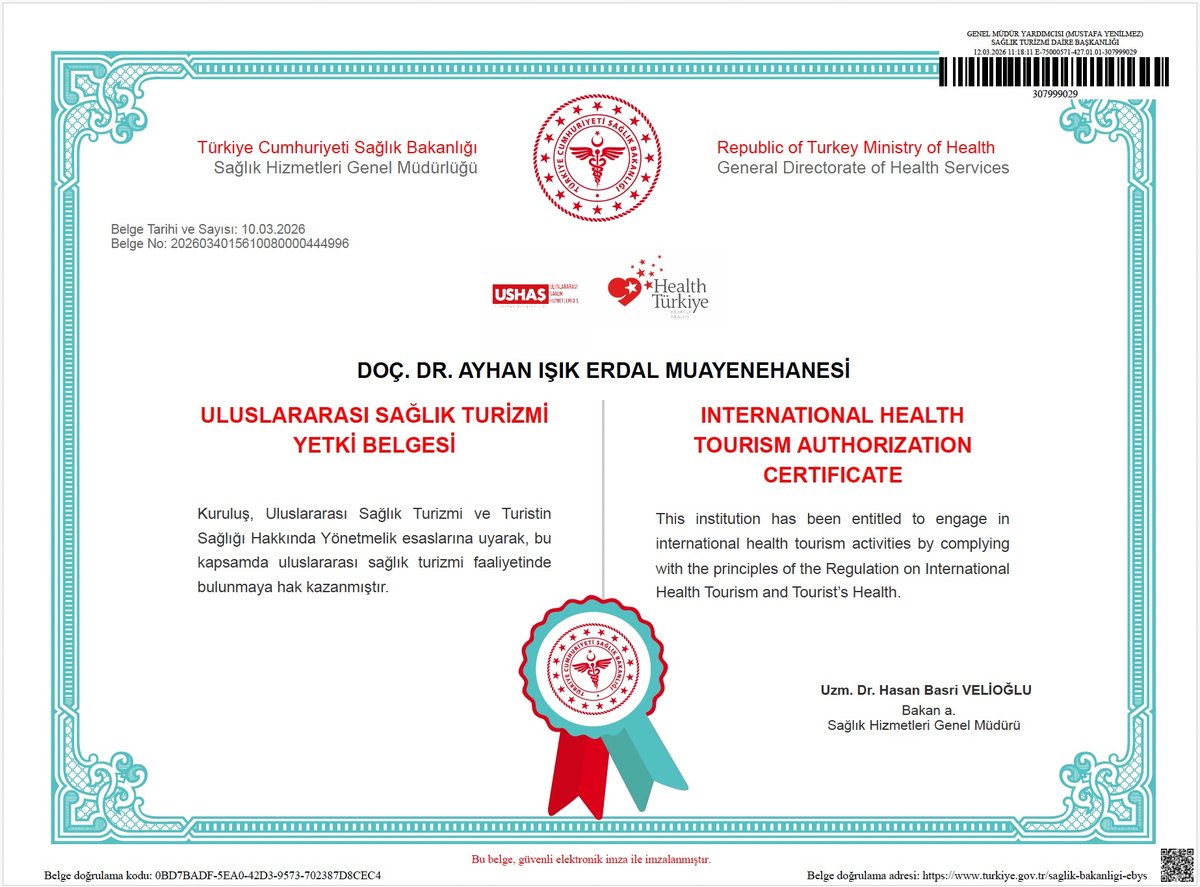
Practically, this means three things for an international patient:
- The clinic is registered with a state body that has investigative authority over it.
- If something goes wrong, you have an official complaint route through the Ministry of Health, in addition to legal recourse.
- The clinic is contractually obliged to maintain post-operative records and accept follow-up care for international patients.
Complication rates
Honest discussion of complications is itself a safety indicator — clinics that publish "0% complications" are either under-reporting or operating on an artificially selected patient base. The published combined mommy makeover literature reports the following ranges:
| Complication | Rate range | Typical management |
|---|---|---|
| Seroma (fluid collection) | 8–15% | Aspirate in clinic; rarely needs further surgery |
| Hematoma | 1–3% | Small: observe; larger: return to OR for evacuation |
| Wound dehiscence (small) | 3–8% | Local wound care; rarely surgical |
| Surgical site infection | 1–3% | Antibiotics; severe cases require surgical drainage |
| DVT / pulmonary embolism | <0.5% | Prevented by mobilisation + chemical prophylaxis |
| Skin necrosis (clinically significant) | 1–2% | Wound care; revision at 6–12 months |
| Capsular contracture (implant cases) | 5–10% over 10 years | Capsulectomy + replacement if symptomatic |
| Need for revision in first 12 months | 5–10% | Minor revision under local; major rare |
Smoking, BMI above 32, and uncontrolled diabetes are the strongest patient-side risk factors. Smokers are required to stop 4 weeks before and 4 weeks after surgery — this is non-negotiable. The clinic does test for nicotine if there is doubt.
What if something goes wrong?
The patient pathway when a complication occurs is the most important practical safety question. In Dr. Erdal's practice:
- During Istanbul stay (typically days 1–10): Daily contact with the clinic. Most early complications (seroma, suture problems, hematoma) are detected during scheduled follow-ups. All management is at the original JCI hospital, performed by Dr. Erdal.
- After return home (weeks 2–6): WhatsApp follow-up with photo review. If a problem emerges, Dr. Erdal will guide local management and decide whether return to Istanbul is needed.
- Months 2–12: Late issues (small revisions, scar concerns, persistent asymmetry) are reviewed by photo. Minor revisions handled at no additional surgical fee in the first 6 months for issues attributable to the original surgery.
- Year 2 and beyond: Reviewed individually. Late events (capsular contracture, weight changes affecting result) are not covered by the original quote, but Dr. Erdal's clinic handles them at preferential rates for prior patients.
Patient safety checklist
Before you commit to any plastic surgery — anywhere in the world — confirm in writing:
Is the surgeon board-certified in plastic surgery?
Not just a 'cosmetic surgeon' or 'aesthetic doctor' — those terms are not regulated in most countries. Look for the specialty board (FACS, FEBOPRAS, ABPS, RCPS, depending on country). Verify directly on the board's public registry, not on the surgeon's own website.
Is the operation at an accredited hospital — not a clinic surgical suite?
Combined mommy makeover should be performed in a fully equipped hospital with an ICU on-site for the rare emergency. Clinic operating rooms ('surgicenters') are appropriate for short single procedures, not 5-hour combined cases.
Who administers and monitors anaesthesia?
The answer should be a board-certified specialist anaesthesiologist who stays in the operating room. If the clinic answer is vague ('we have an anaesthetist') or refers to a 'nurse anaesthetist' for a 5-hour case, that is a warning sign.
Is pre-operative blood work and an anaesthesia consultation required?
For any combined operation, yes. If a clinic offers to operate without seeing recent blood work and without an anaesthesiology consultation, decline. Patient selection is the most important safety filter.
What is the published complication rate, and how are complications managed?
A clinic that has done meaningful volumes of combined mommy makeover should be able to discuss its own complication experience honestly. Vague answers ('we don't have complications') indicate either inexperience or dishonesty.
Is complication management included in the quoted price?
For the first 6 months at minimum, yes. Read the contract. Some clinics quote attractively low prices but charge separately for drain reinsertion, scar revision, or seroma aspiration — turning the actual cost considerably higher.
Can you contact the surgeon directly post-operatively?
WhatsApp follow-up with the surgeon (not just a coordinator) for the first 12 weeks should be standard for international patients. If the answer is that you can only reach a coordinator who 'will pass messages on,' that is inadequate for major surgery.
Specific questions to ask
You can copy and paste these questions to any clinic — including ours — and compare answers:
- "What is your full surgical board certification, and on which public registries can I verify it?"
- "Where will my surgery be performed? Is the hospital JCI-accredited?"
- "Will a board-certified anaesthesiologist be present for the entire operation? What is their training?"
- "How many combined mommy makeovers do you perform per year? What is your complication experience?"
- "If I have a complication, where is it managed, by whom, and is it included in the original quote?"
- "What is your post-operative follow-up plan for the first 12 weeks after I return home?"
- "Can I see verified before-and-after photos of patients with my body type, with date and procedure clearly labelled?"